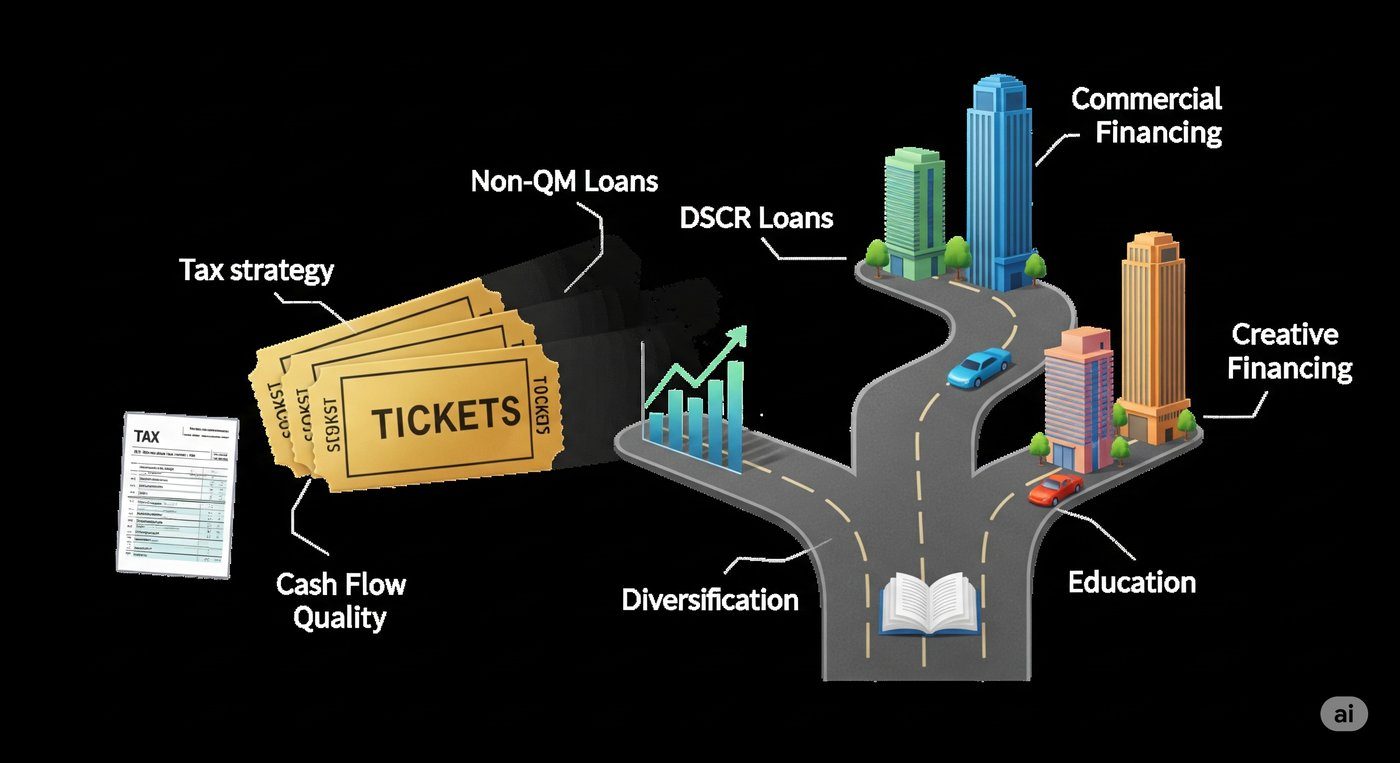
As a real estate investor, reaching the point where you've used all 10 of your conventional "golden tickets" is actually a milestone worth celebrating. It means you've successfully acquired 10 financed investment properties using the best rates and terms available in the market. But now what?
If you're staring at this crossroads wondering how to continue building your portfolio, you're not alone. This is precisely where many investors feel stuck, unsure of their next move. The good news? Your investment journey is far from over – it's just evolving.
Understanding Your "Golden Tickets"
First, let's clarify what we mean by "golden tickets." These are your conventional Fannie Mae and Freddie Mac loans – the holy grail of investment property financing. They offer the highest leverage at the lowest interest rates you'll find anywhere on the planet. Each qualified individual gets 10 of these loans, which is why we call them golden tickets.
Pro tip: If you're married, you can actually secure 20 golden tickets total by qualifying separately – 10 for each spouse. This is one of our favorite optimization strategies for couples just starting their investment journey.
Your Post-Golden Ticket Options
Once you've maximized your conventional loan opportunities, you have several powerful alternatives:
1. Non-QM Loans: Your Natural Next Step
Non-QM (Non-Qualified Mortgage) loans are typically where investors transition after exhausting their golden tickets. Here's what makes them attractive:
- Similar underwriting standards to conventional loans
- Comparable leverage to what you're used to
- Slightly higher rates (typically 1 to 1.5 points above conventional)
- Flexible qualification criteria for unique situations
The beauty of non-QM loans is that if you qualified for conventional financing, you'll likely qualify for these as well. The primary difference? Cost. But remember, if your deal depends on a 1-point rate difference, there might be something wrong with the deal itself.
2. DSCR Loans: Property Performance Over Personal Income
DSCR (Debt Service Coverage Ratio) loans focus on one simple question: Does the property's rental income cover the mortgage payment? This approach offers several advantages:
- No personal DTI requirements
- Qualification based solely on property cash flow
- Ideal for investors with complex income structures
- Perfect for properties with strong rental potential
3. Commercial Financing: Thinking Bigger
Once you hit 5+ units on a property, you're in commercial territory. But commercial loans can also offer unique opportunities like:
- Cross-collateralization options
- Portfolio financing strategies
- Larger loan amounts
- Different qualification criteria
4. Creative Financing Strategies
Don't overlook alternative approaches:
- Seller financing arrangements
- Hard money for renovation projects
- Private lending relationships
- Partnership structures
The Psychology of Moving Beyond Conventional
Many investors experience anxiety when transitioning from conventional loans. It's natural – you're leaving the comfort zone of the "best" rates. But here's the reality check you need:
A slightly higher interest rate on a cash-flowing property is infinitely better than the perfect rate on a property you never bought.
Let's put this in perspective with real numbers. On a $100,000 loan, the difference between 6.5% and 7.5% is about $58 per month. If that $58 monthly difference makes or breaks your deal, you need to find better deals.
Strategic Considerations for Your Next Phase
1. Optimize Your Tax Strategy
As your portfolio grows, your tax strategy becomes increasingly important. Consider:
- Cost segregation studies for larger properties
- 1031 exchanges for portfolio optimization
- Entity structuring for liability protection
2. Focus on Cash Flow Quality
With slightly higher borrowing costs, cash flow becomes even more critical:
- Target stronger rental markets
- Focus on properties with rent growth potential
- Consider value-add opportunities
3. Diversification Strategies
- Geographic diversification across different markets
- Property type diversification (single-family, small multifamily, etc.)
- Risk level diversification (stable vs. value-add properties)
The Education Advantage
This transition point is where education becomes your greatest asset. Understanding your options, qualification requirements, and strategic implications allows you to make informed decisions rather than reactive ones.
At Ridge Lending Group, we've guided countless investors through this exact transition. Our experience shows that investors who embrace the post-golden ticket phase often accelerate their portfolio growth because they:
- Think more strategically about property selection
- Focus on stronger cash flow metrics
- Develop more sophisticated investment criteria
- Build better relationships with lenders and partners
Your Next Steps
If you're approaching or have reached your conventional loan limit:
- Assess your current portfolio performance
- Understand your non-QM loan options
- Explore DSCR loan possibilities
- Consider your long-term investment strategy
- Connect with experienced investment lenders
The Bottom Line
Maxing out your golden tickets isn't the end of your real estate investment journey – it's graduation to the next level. Yes, the financing landscape changes, but the opportunities remain abundant for educated investors who understand their options.
The key is working with lenders who specialize in investment properties and understand the unique challenges and opportunities that come with portfolio growth. Don't let the fear of slightly higher rates keep you on the sidelines when great deals are waiting.
Remember, real estate investing is a marathon, not a sprint. Each phase of your journey requires different strategies, different financing tools, and different perspectives. Embrace the evolution, stay educated, and keep building.